Why the Same Media Company Publishes Different Articles and Operates Different Websites for Each Language Region
 0
0
 0
0
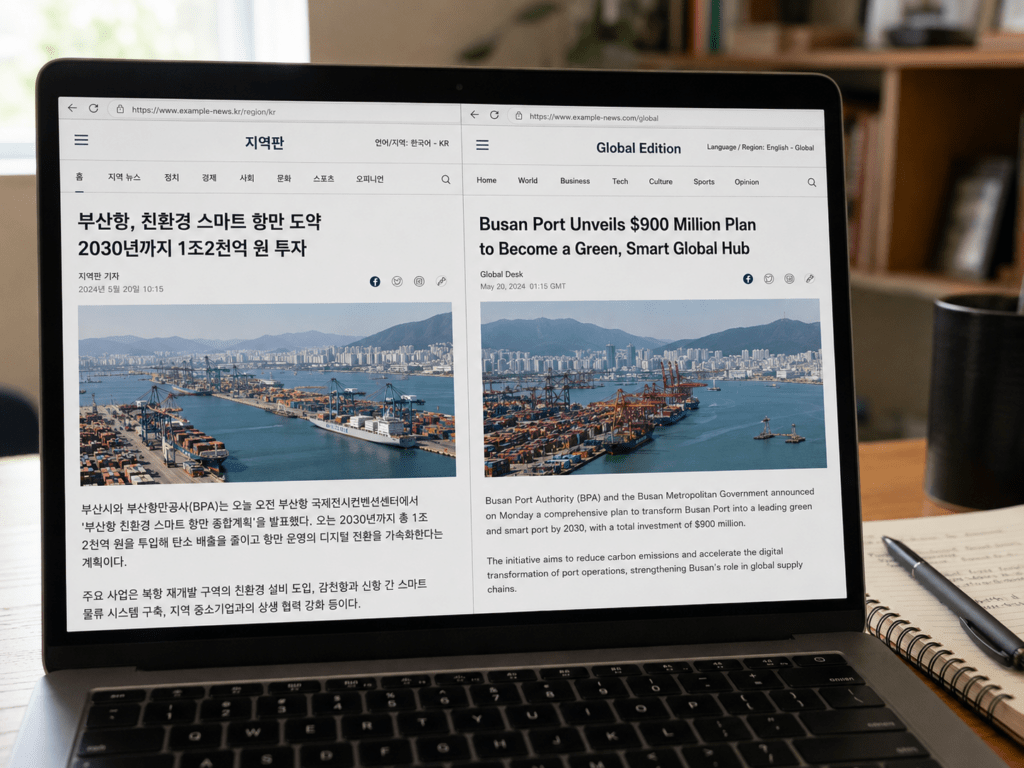
Two websites carrying the same media brand may look connected but still publish different headlines, stories, and levels of detail. One page may be a direct translation, another may be a localized rewrite of the same reporting, and a third may be an independently produced article for a specific audience.
This distinction matters when readers compare a Korean-language edition with an English or global edition. A missing paragraph does not always mean information was deliberately removed, and a different headline does not automatically mean one version is inaccurate. The two pages may have different writers, publication times, source material, or editorial purposes.
First Identify Whether It Is a Translation, a Localized Version, or a Separate Article
Before comparing the content, determine what relationship exists between the two pages.
| Article Type | Common Signs | How to Read It |
|---|---|---|
| Direct translation | Same byline, publication time, structure, images, quotations, and source links | Compare the wording and check whether translation changed the meaning |
| Localized adaptation | Same main facts but a different headline, introduction, background, or examples | Note which details were added or removed for the target audience |
| Separately reported article | Different byline, publication time, interviews, sources, or article structure | Treat the pages as two reports about the same event, not two versions of one article |
A direct translation is usually the easiest to identify. The paragraphs follow the same order, and the article cites the same officials, reports, or interviews. However, even a translated page may not reproduce the original perfectly.
Reuters, for example, states that some of its articles are automatically translated for readers in other languages and warns that automated translation may contain errors or omit necessary context. This means a different-language Reuters page may be a translated product rather than a newly reported regional article.
A localized adaptation starts from the same reporting but changes the presentation. An English edition may explain a Korean institution that requires no introduction for domestic readers. The Korean version may retain the complete agency name, district, law, or public-service instructions, while the global version reduces them to a broader description.
A separately reported article goes further. It may use a different journalist, interview local experts, focus on consequences for another market, or publish after new information becomes available. In that case, the difference is not simply translation.
Large international broadcasters also design multilingual products for particular audiences. NHK WORLD-JAPAN identifies itself as NHK’s international service and currently provides content in 19 languages, including Korean. That multilingual structure is intended to deliver information to different audiences rather than create a guaranteed sentence-by-sentence mirror of Japanese domestic coverage.
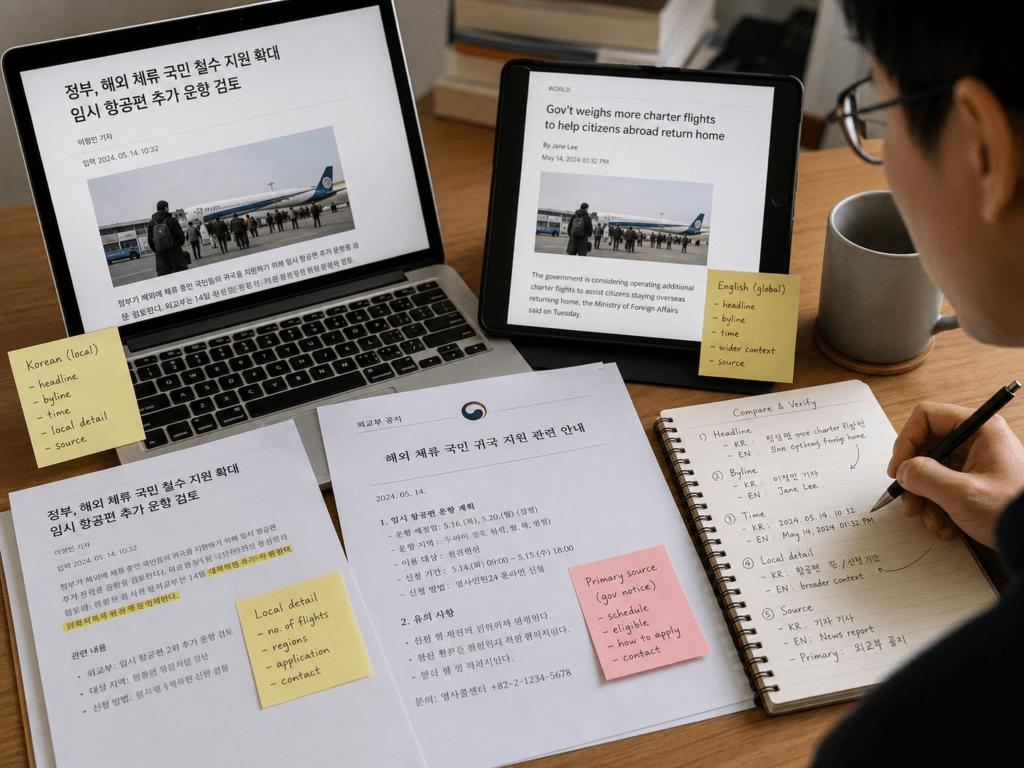
The fastest checks are the byline, publication and update times, source line, article structure, links, and images. When these elements differ substantially, compare the pages as separate reporting.
Compare What Each Edition Added, Changed, or Left Out
Once the relationship is clear, focus on details that change the reader’s understanding of the event. There is little value in comparing every sentence.
For a Korean and global edition, examine the following:
| Comparison Point | What to Check |
|---|---|
| Headline and opening paragraph | Does one focus on the event itself while the other emphasizes its effect on Korea or the international market? |
| Publication and update time | Was one article written after a correction, policy response, or new figure appeared? |
| Byline and sources | Did the regional edition interview different officials, experts, residents, or businesses? |
| Names and institutions | Are Korean ministries, districts, companies, or laws identified precisely in one version but generalized in the other? |
| Numbers and scope | Do both articles use the same period, currency, population group, geographic coverage, and data release? |
| Quotations | Is a quotation shortened, translated differently, or attributed more generally? |
| Actionable information | Does one version include deadlines, transport changes, eligibility rules, contacts, or application links? |
Different headlines often reflect different audience priorities. A Korean edition may emphasize the impact on domestic consumers, companies, or government policy. An English edition may focus on international markets, diplomatic consequences, or why the event matters outside Korea.
Language-specific services can also develop their own subject priorities. The official BBC News Chinese channel, for example, describes its coverage in terms of China-focused reporting and analysis across politics, economics, culture, and education. This illustrates how a language service may produce audience-specific coverage rather than merely translate every article from the main English edition.
Do not assume that the longer article is necessarily more reliable. A local story may contain more names and regional details but still rely on early information. A shorter international article published later may contain an updated casualty figure, revised policy, or formal response.
When the numbers differ, compare the source date before deciding that one page is wrong. The editions may be using preliminary and revised data, different currencies, or different definitions.
Translation also requires special attention. Korean administrative titles, legal terms, and place names may be simplified or rendered inconsistently in English. Terms such as “considering,” “planning,” “announced,” “approved,” and “entered into force” must not be treated as equivalent.
When a translated term affects the meaning, retain the Korean expression in parentheses and check the institution’s own English-language page or original document.
Use the Korean Edition for Local Precision and the Global Edition for Wider Context
Each edition is most useful for a different purpose.
Use the Korean-language edition when you need exact local names, public agencies, transport routes, domestic laws, application requirements, business responses, or statements from Korean officials and residents.
Use the English or global edition when you need international context, foreign reaction, comparison with other countries, or an explanation written for readers unfamiliar with Korea.
For facts that affect a decision, neither article should be the final source. Verify the information through the original government notice, court decision, company announcement, statistical database, event page, or policy document.
A practical reading process is:
Confirm the two pages cover the same event and update stage → identify whether they are translations or separate articles → record meaningful differences → verify important details through the original source.
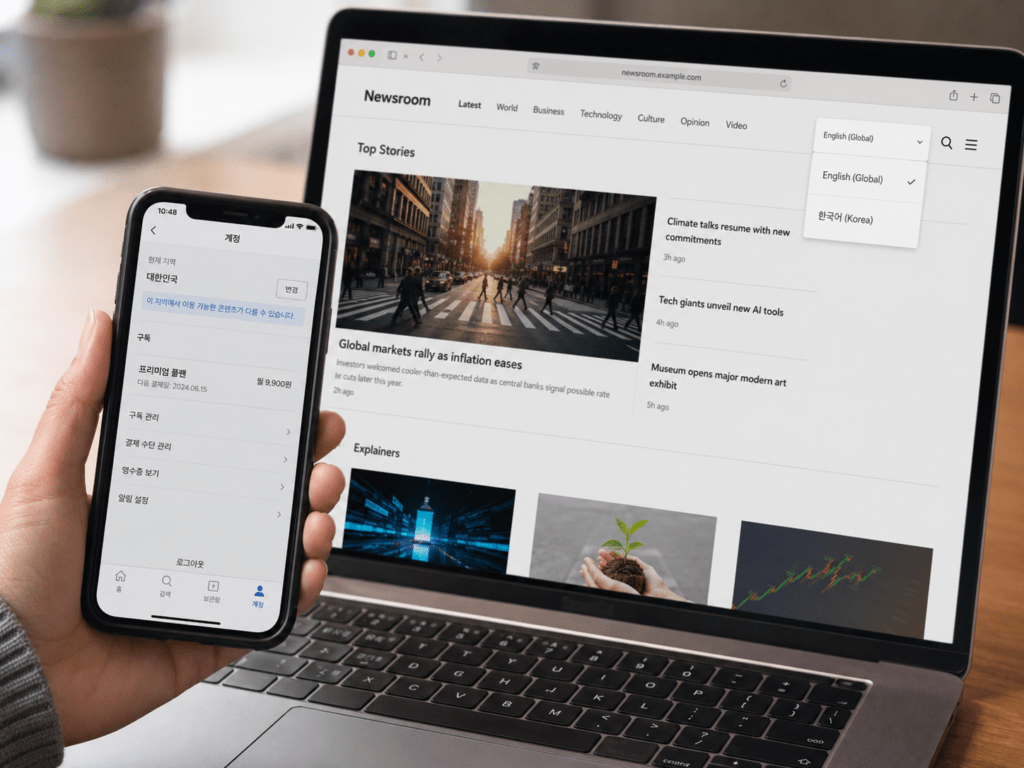
Account and subscription access should also be checked separately. The same company name does not guarantee that every regional site has the same paywall, registration system, newsletters, or subscription coverage.
Reuters, for instance, currently states that paid Reuters.com subscriptions are available only in selected countries, although users elsewhere may still be able to register for access. Its subscription covers Reuters.com and the Reuters News app, illustrating that access is defined by the current product and market rather than merely by the company’s global brand.
Before paying on a regional edition, confirm which domains, apps, languages, and newsletters are included. Also check whether the account can be used on the company’s other editions and whether articles displayed on another regional domain remain subject to a separate paywall.
Cite Each Edition for the Information It Actually Supports
The safest way to cite information from different editions is to state what each one contributes:
The Korean edition identifies the affected districts and responsible local office. The global edition explains the wider economic significance. The government notice confirms the effective date and eligibility conditions.
This approach avoids declaring one edition the single “complete” version. The regional site provides audience-specific detail, the global edition supplies broader context, and the original source establishes the facts that require precise verification.


